
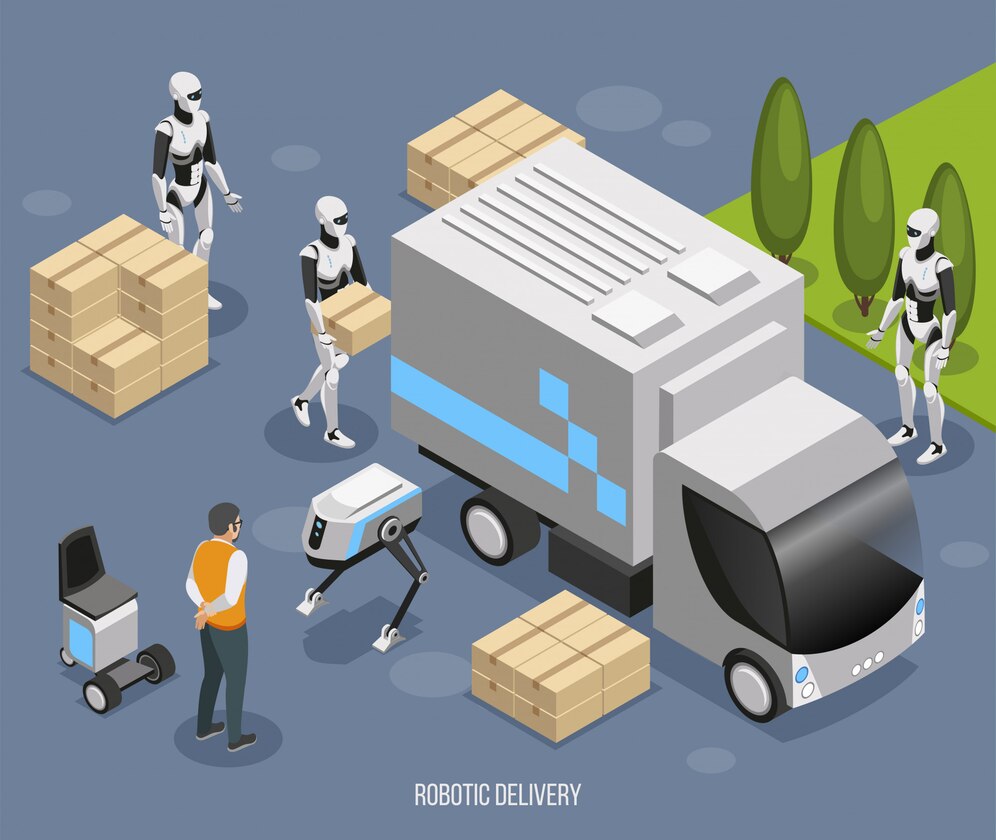
Logistics and Supply Chain Management involve planning, implementing, and controlling the movement and storage of goods, services, and information from the point of origin to the point of consumption. It encompasses all the activities involved in getting the right product to the right place at the right time in the most cost-effective way.
Logistics is a subset of supply chain management that focuses on the physical movement of goods, while supply chain management takes a broader view, encompassing all the activities involved in the flow of goods and services from the supplier to the customer. Artificial intelligence (AI) is revolutionizing the way we manage logistics and supply chain business process outsourcing. By analyzing vast amounts of data and making intelligent decisions, AI can optimize every step of the process, from forecasting demand to delivering goods to your doorstep.

Applications of AI in logistics and supply chain management
1. Demand Forecasting
AI can analyze historical sales data, social media trends, weather patterns, and economic indicators to predict future demand with much greater accuracy. This leads to:
- Reduced inventory waste: Businesses only produce or stock what they actually need, minimizing losses from unsold products.
- Improved production planning: Manufacturers can adjust their production schedules to meet anticipated demand, avoiding costly downtime or backlogs.
- Dynamic pricing: Companies can adjust prices based on real-time demand and market conditions, maximizing profits.
2. Route Optimization
AI algorithms can analyze factors like traffic congestion, weather conditions, and vehicle capacity to determine the most efficient routes for deliveries. This results in:
- Reduced transportation costs: Optimized routes save on fuel, driver time, and wear-and-tear on vehicles.
- Faster delivery times: Customers receive their orders sooner, enhancing satisfaction and loyalty.
- Reduced environmental impact: Optimized routes contribute to lower carbon emissions.
3. Automated Warehousing
AI-powered robots can handle tasks like picking and packing orders, improving accuracy and efficiency. This leads to:
- Reduced labor costs: Robots can work 24/7 without breaks, reducing the need for human labor.
- Faster order fulfillment: Orders are processed and shipped more quickly, improving customer satisfaction.
- Reduced errors: Robots are less prone to mistakes than human workers, minimizing order fulfillment errors.
4. Predictive Maintenance
AI can analyze sensor data from vehicles and equipment to predict potential failures before they occur. This leads to:
- Reduced downtime: Preventive maintenance keeps vehicles and equipment operational, avoiding costly disruptions.
- Improved safety: Identifying potential failures before they happen minimizes the risk of accidents.
- Extended equipment lifespan: Proactive maintenance extends the life of vehicles and equipment, reducing replacement costs.
5. Fraud Detection and Risk Management
AI can analyze data from logistics and supply chain management outsourcing services to identify suspicious activity and potential fraud. This leads to:
- Reduced financial losses: Early detection of fraud prevents financial losses from theft or cybercrime.
- Improved supply chain security: Identifying potential risks in the supply chain helps mitigate disruptions and ensure secure delivery of goods.
- Enhanced compliance: AI can help organizations comply with complex regulations governing logistics and dynamics 365 supply chain management.
Future of AI in Logistics and Supply Chain Management: A Glimpse of Tomorrow
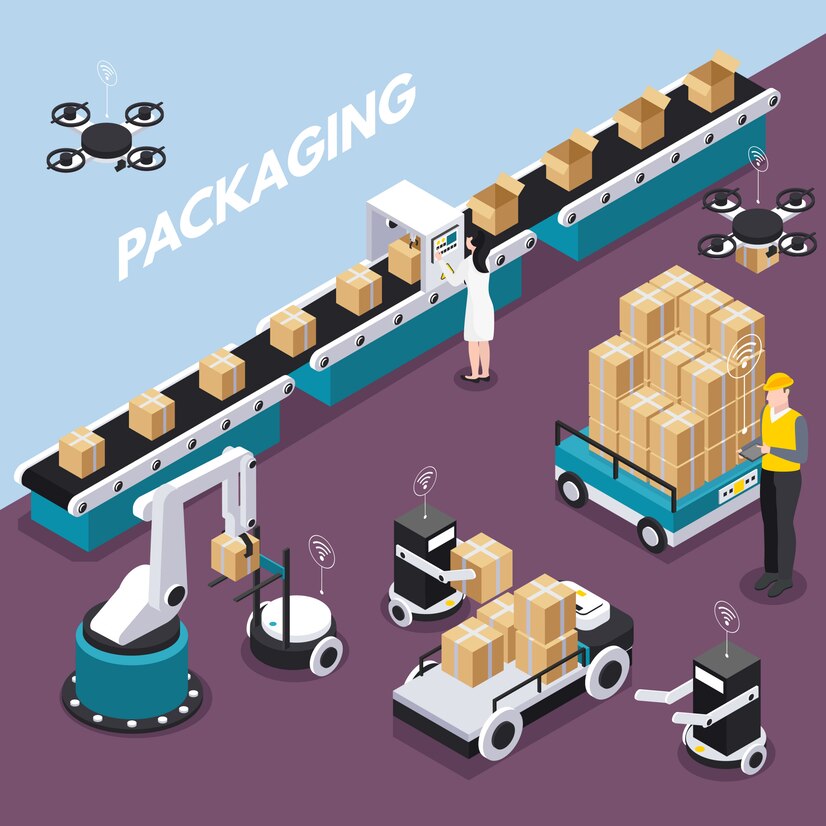
The logistics and supply chain landscape is undergoing a seismic shift, driven by the relentless march of artificial intelligence (AI). While we’ve already seen remarkable applications, the future holds even more extraordinary possibilities:
1. Hyper-automated Supply Chains
Imagine a future where AI orchestrates every step of the supply chain – from demand forecasting to delivery. Predictive algorithms anticipate customer needs, triggering automated production adjustments and optimized delivery routes. Robots handle warehousing, while self-driving trucks and drones navigate cityscapes and rural roads, guided by intelligent algorithms. This hyper-automated future promises:
- Unmatched Efficiency: Minimal waste, optimized labor use, and faster shipping create a leaner, meaner supply chain.
- Resilience and Agility: Real-time data analysis and dynamic decision-making allow for rapid adaptation to unforeseen disruptions.
- Sustainability: Optimized routes and fuel-efficient logistics reduce carbon footprint and promote environmental responsibility.
2. The Rise of “Smart” Everything
Sensors embedded in everything from warehouses to containers will feed a constant stream of data to AI, creating a network of intelligent nodes. This interconnected web will enable:
- Predictive Maintenance: AI anticipates equipment failures, scheduling proactive maintenance before breakdowns occur.
- Real-time Visibility: Track goods in real-time, providing granular insights into location, condition, and potential delays.
- Dynamic Warehousing: AI robots adapt to inventory fluctuations, optimizing storage and retrieval strategies.
3. Personalization at Scale
AI will unlock the potential for hyper-personalized logistics. Imagine a world where delivery routes adapt to individual customer preferences, packages arrive at the perfect temperature, and even shipping notifications are tailored to personal interests. This level of customization will lead to:
- Enhanced Customer Experience: Personalized deliveries build trust and loyalty, exceeding customer expectations.
- Dynamic Pricing: AI can adjust prices based on real-time demand and individual customer preferences, maximizing revenue.
- Niche Market Opportunities: Customized logistics open doors for serving niche markets and fulfilling unique customer needs.
4. The Human-AI Partnership
While AI will automate many tasks, the human element will remain crucial. The future lies in harnessing the power of AI to augment human capabilities, not replace them. This means:
- Upskilling and Reskilling: Workers will need to adapt to new roles, focusing on creative problem-solving, strategic decision-making, and human interaction.
- Human Oversight and Ethics: AI algorithms need human oversight to ensure fairness, ethical decision-making, and alignment with organizational values.
- Collaboration and Trust: Building trust between AI and human workers is essential for a successful collaborative partnership.
CONCLUSION
Mandli Technologies is the best supply chain management Company in USA has the potential to significantly transform business and the way it serves its clients. By embracing AI and its applications in logistics and supply chain management, It can create a more efficient, sustainable, and customer-centric future for itself and its clients. AI can analyze large amounts of data from Mandli’s operations to identify trends and insights. AI-powered chatbots and virtual assistants can handle routine inquiries from Mandli’s clients, freeing up human agents for more complex tasks. This can improve call center efficiency and customer satisfaction.
Leave a Reply