
While the supply chain encompasses the entire journey of a product from raw materials to the customer’s hands, logistics acts as the pulsating heart, powering the movement and storage of goods at every stage. It’s the intricate ballet of trucks, planes, warehouses, and people working in concert to ensure products flow seamlessly towards their destination.
Key Functions:
- Inbound Logistics: Bringing raw materials and components to the production facility, involving supplier sourcing, transportation, and customs clearance.
- Outbound Logistics: Moving finished goods from the production facility to the end customer, encompassing warehousing, order fulfillment, packaging, shipping, and last-mile delivery.
- Internal Logistics: Managing the flow of materials within the production facility, optimizing storage, handling, and transportation between production stages.
- Reverse Logistics: Handling the return of goods for various reasons, like returns, defects, or recalls, encompassing product inspection, sorting, repair/refurbishment, and proper disposal.
Impact on the Supply Chain
- Cost Efficiency: Streamlined logistics processes and optimized transportation routes can significantly reduce costs associated with storage, transport, and labor.
- Speed and Delivery: Efficient Logistics Support Services in India ensure timely delivery of goods, meeting customer expectations and boosting satisfaction.
- Inventory Management: Optimized logistics improve inventory control, minimizing stockouts and overstocking, and leading to efficient resource utilization.
- Competitive Advantage: Companies with strong logistics capabilities can outperform competitors by ensuring faster delivery times, lower costs, and greater responsiveness to customer needs.
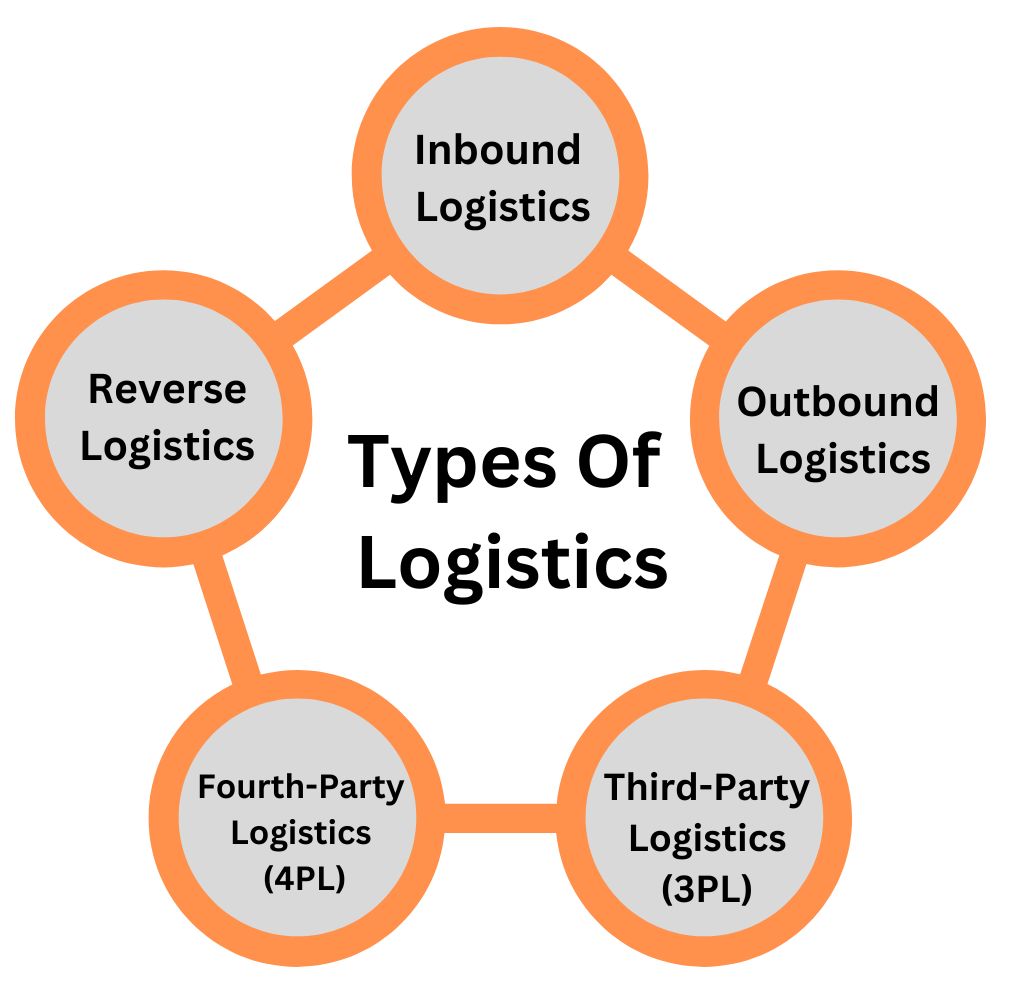
What are the types of logistics in supply chain management?
What is Inbound Logistics?
Inbound logistics is the heart of the supply chain management services, responsible for bringing the essential raw materials and components needed for production from suppliers to a company’s facilities.
Strategies for Optimizing Inbound Logistics
- Supplier sourcing and selection: Finding the right suppliers who can provide high-quality materials at competitive prices and ensure reliable delivery.
- Purchasing and order management: Negotiating contracts, placing orders, and managing purchase orders and invoices.
- Transportation and customs clearance: Arranging for the efficient and cost-effective transport of goods from suppliers to the company’s warehouse or production facility, which may involve dealing with customs clearance procedures.
- Receiving and inspection: Unloading goods upon arrival, checking them for accuracy and quality, and ensuring proper documentation.
- Warehousing and storage: Managing the storage of incoming materials and components in a way that’s organized, efficient, and protects them from damage.
- Inventory management: Maintaining optimal inventory levels to avoid shortages or excess stock and tracking inventory levels through systems like barcode scanners.
Benefits of efficient inbound logistics
- Reduced production costs: By optimizing transportation routes, negotiating with suppliers, and minimizing waste, efficient inbound logistics can lead to significant cost savings.
- Improved production flow: Having the right materials available at the right time prevents production delays and keeps everything running smoothly.
- Enhanced quality control: Thorough inspection of incoming materials helps to identify and prevent defective products from entering the production process.
- Increased customer satisfaction: Timely delivery of finished goods to customers relies heavily on a well-functioning inbound logistics system.
What is Outbound Logistics?
Outbound logistics is the dynamic engine that takes finished goods from production facilities to the eager hands of your customers. It’s like the final act in a play, where the hero strides triumphantly towards the finish line, and it’s just as crucial as the initial setup in inbound logistics.
Strategies for Optimizing Outbound Logistics
- Order fulfillment: This is the star of the show, involving picking the right items from your warehouse, packing them securely, and ensuring they reach the correct destination.
- Warehousing and distribution: Efficiently storing goods in warehouses located strategically for quick and economical delivery is key.
- Packaging and labeling: Protecting your products during transport and providing clear information for carriers and customers is vital.
- Shipping and transportation: Choosing the right mode of transportation (trains, trucks, planes) based on speed, cost, and product type is crucial
- Last-mile delivery: The final leg of the journey, often the most complex and costly, involves getting your products to the end customer’s doorstep.
- Customer service: Addressing any delivery issues or questions promptly and professionally is paramount.
Benefits of effective outbound logistics
- Reduced costs: Streamlined processes and optimized transportation can lead to significant savings.
- Faster delivery times: Happy customers crave quick deliveries, and efficient outbound logistics make that happen.
- Improved customer satisfaction: Getting the right products, on time and in good condition, builds trust and loyalty.
- Enhanced brand image: A seamless delivery experience reflects positively on your brand and reputation.
What is Third-Party Logistics (3PL)
Third-party logistics (3PL) is like having a superhero sidekick for your supply chain. It’s the practice of outsourcing some or all of your logistics functions to a specialized company, rather than handling them in-house.
Strategies for Optimizing Third-party logistics (3PL)
- Warehousing and distribution: Store your goods in strategically located warehouses and efficiently manage their distribution to customers.
- Transportation and shipping: Choose the right modes of transport (air, land, sea) based on cost, speed, and product type, and handle all shipping arrangements.
- Order fulfillment: Pick, pack, and ship orders accurately and on time, ensuring a smooth customer experience.
- Inventory management: Track and manage your inventory levels, preventing stockouts and overstocking.
- Reverse logistics: Handle product returns, repairs, and recycling.
- Technology and expertise: Utilize advanced logistics software and the knowledge of experienced professionals to optimize your supply chain.
Benefits of using a 3PL
- Cost savings: Accessing a 3PL’s network of warehouses, transportation carriers, and negotiated rates can often lead to cost reductions compared to managing your own logistics.
- Increased efficiency: 3pl outsourcing services in India have expertise and dedicated resources, allowing them to optimize your logistics processes and improve efficiency.
- Scalability: Easily adjust your logistics capacity based on your business needs without the burden of investing in infrastructure or hiring in-house staff.
- Focus on core business: Free up your time and resources to focus on your core business activities, leaving the logistics to the experts.
What is Reverse logistics?
Reverse logistics, unlike the forward flow of goods in a traditional supply chain, deals with the movement of products back from the customer towards the manufacturer or retailer. It’s like the rewind button of your supply chain, ensuring proper handling and disposition of goods that no longer reside with the end consumer.
Strategies for Optimizing Reverse Logistics
- Product Return: Managing the return of goods from customers for various reasons like defects, unwanted items, or warranty claims.
- Inspection and Sorting: Assessing returned products to determine their condition, suitability for repair, resale, or recycling.
- Repair and Refurbishment: Fixing repairable products to be sold again or used as spare parts.
- Recycling and Disposal: Processing recyclable materials or disposing of unusable products responsibly and sustainably.
- Data Management: Tracking returned products, their reasons for return, and their final disposition.
Benefits of Effective Reverse Logistics
- Cost Reduction: Saves money by recovering value from returned products through repair, resale, or recycling, minimizing waste disposal costs.
- Environmental Sustainability: Reduces environmental impact by diverting materials from landfills and promoting resource recovery.
- Customer Satisfaction: Enhances customer experience by offering convenient and responsible options for returns and product disposal.
- Brand Reputation: Improves brand image by demonstrating commitment to sustainability and responsible product lifecycle management.
What is Production Logistics?
Production logistics, the invisible conductor of the manufacturing orchestra, ensures the smooth flow of materials within a production facility. It’s the intricate ballet behind every finished product, where raw materials waltz with components, and subassemblies tango their way towards final assembly.
Strategies for Optimizing Production Logistics
- Material handling: Loading, unloading, transporting, and storing raw materials, components, and finished products within the facility.
- Storage and warehouse management: Optimizing storage space, organizing inventory, and maintaining proper environmental conditions for different materials.
- Production scheduling and sequencing: Planning the order of production activities, ensuring materials and resources are available at the right time for each stage.
- Assembly line management: Overseeing the flow of materials through the assembly line, ensuring efficient and accurate product assembly.
- Quality control: Inspecting materials and finished products at various stages to ensure they meet quality standards.
- Information management: Maintaining accurate data on inventory levels, production schedules, and material movement within the facility.
Benefits of effective production logistics
- Increased production efficiency: Smooth flow of materials reduces downtime and bottlenecks, leading to higher output and shorter production times.
- Reduced costs: Optimized storage, efficient material handling, and minimized waste result in significant cost savings.
- Improved product quality: Consistent material flow and proper quality control measures lead to fewer defects and higher quality finished products.
- Enhanced flexibility: Agile production logistics enable quick adjustments to production schedules and product specifications to meet changing market demands.
What is Fourth-Party Logistics (4PL)?
Fourth-party logistics (4PL) is like having a strategic logistics mastermind at your side, orchestrating your entire supply chain beyond just the nuts and bolts of execution. It’s not just about getting goods from point A to point B efficiently; it’s about optimizing the entire journey for maximum profitability and success.
Strategies for Optimizing Fourth-Party Logistics (4PL)
- Strategic planning and design: Analyzing your entire supply chain, identifying inefficiencies and opportunities, and developing a roadmap for optimization.
- Technology integration: Implementing advanced logistics software and data analytics tools to gain real-time insights and improve decision-making.
- Risk management: Proactively identifying and mitigating potential risks throughout the supply chain, ensuring smooth operations.
- Vendor consolidation: Negotiating better rates and terms with suppliers, optimizing procurement costs and relationships.
- Performance monitoring and reporting: Tracking key performance indicators (KPIs) and providing regular reports to measure progress and identify areas for improvement.
Benefits of using a 4PL
- Increased efficiency and cost savings: Streamlined processes, optimized transportation routes, and improved vendor relationships can lead to significant cost reductions.
- Improved flexibility and agility: 4PLs can help you adapt quickly to changing market demands and disruptions in the supply chain.
- Enhanced innovation and competitiveness: Their expertise and access to technology can help you stay ahead of the curve and gain a competitive edge.
- Reduced risk and improved compliance: 4PLs can help you navigate complex regulations and mitigate potential risks across your supply chain.
Difference between Third-Party Logistics(3PL) & Fourth-party logistics(4PL)
he difference between Third-Party Logistics (3PL) and Fourth-Party Logistics (4PL) lies in the depth and breadth of their services, with 4PL going beyond the execution of specific functions provided by a 3PL.
| Feature | 3PL | 4PL |
| Focus | Execution of specific functions | Optimizing entire supply chain |
| Services | Warehousing, transportation, order fulfillment | Strategic planning, technology integration, risk management, vendor consolidation |
| Benefits | Cost savings, increased efficiency, access to expertise | Increased efficiency, cost savings, improved flexibility & agility, enhanced innovation & competitiveness, reduced risk |
| Limitations | Focuses on individual tasks, limited strategic guidance | Higher cost, requires close collaboration & trust |
CONCLUSION
Mandli Technologies offer a wide range of logistics services, including warehousing, transportation, order fulfillment, reverse logistics, and last-mile delivery. This one-stop-shop approach might be convenient if you require multiple services. They claim to utilize various technology tools, including warehouse management systems (WMS) and transportation management systems (TMS), for efficient operations and real-time tracking. Choosing the right 3PL partner is a crucial decision that can significantly impact your supply chain efficiency and costs.
Leave a Reply